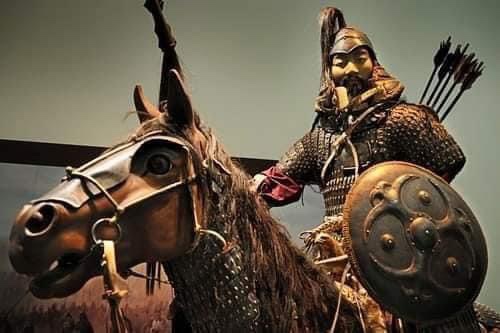
Mongol (Mongol) hi tunlai hian ram hmarchhak biala hnam hrang hrang an ni a, Mongol lal Genghis Khan (1162-1227) chuan Mongol Empire (Mongol Empire) a din thei a, khawvel history-a lian ber pahnihna a ni dawn a, inkar 1206 – 1368 inkar a ni.
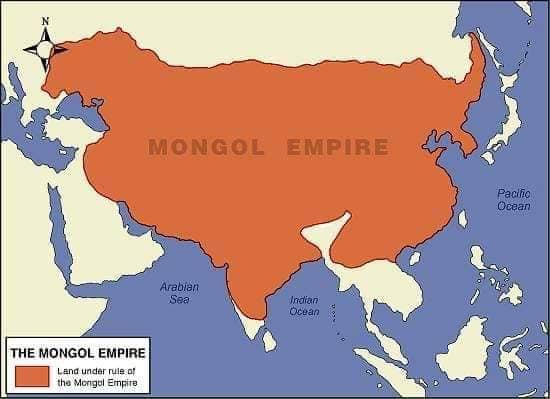
Great Mongol Empire-ah chuan Japan Tuipui atanga Central Asia, Central Europe, Siberia, Indochina, Iran leh Far East thlengin a awm a
Europe hmar lam, hmar lam, leh Asia chhim thlang lam te a huam a ni.
He bial pumpui hi Euroasia tia koh a ni a, Mongol hovin Europe leh Asia thlunzawmna Silk Road hmingthang tak an siam a, Pagan hunlai khan kum 1287 atang khan Mongol hovin Burma ram an rawn bei a.
Mongol Empire-ah hian khawvela sakhaw lian ber ber, Buddhism, Islam, Christianity, leh Taoism te pawh a tel a, Turkish, Persian, Mongolian, leh regional language leh culture dangte pawh a awm a, kum 1279-a khawvel map i en chuan i hmu ang Mongol Empire ropuizia a ni.
Ref: Wikipedia atanga lo chhuak a ni
Lwin Oo (Yanking) chuan a rawn ti a.
lwinooyankin tih a ni….
The Mongol Empire was the second largest empire in the history of the world and had a land area of 33 million square kilometers.
Mongol (Mongol) is an ethnic group in the northeastern part of the country today. The Mongol king Genghis Khan (1162-1227) was able to establish the Mongol Empire (Mongol Empire), which will become the second largest in world history, between 1206 – 1368.
In the Great Mongol Empire, from the Sea of Japan to Central Asia, Central Europe, Siberia, Indochina, Iran, and the Far East
Includes North, Eastern Europe, and Southwest Asia.
This entire region is called Euroasia. The Mongols built the famous Silk Road connecting Europe and Asia. The Mongols invaded Burma from 1287 in the Pagan era.
The Mongol Empire included the world’s major religions, such as Buddhism, Islam, Christianity, and Taoism. There were Turkish, Persian, Mongolian, and other regional languages and cultures. If you look at the world map of 1279, you will see the greatness of the Mongol Empire.
Ref: Wikipedia
Lwin Oo (Yanking)
lwinooyankin

 𝐍𝐆𝐀𝐖𝐍 𝐂𝐇𝐈𝐍 𝐇𝐈𝐒𝐓𝐎𝐑𝐘